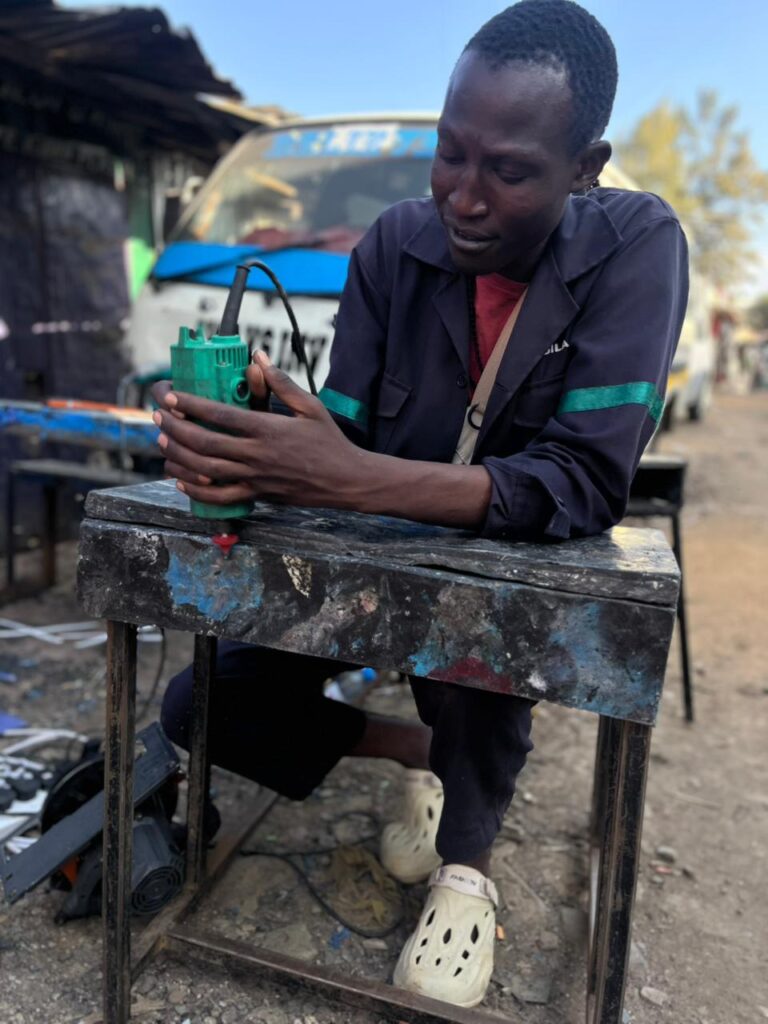
Born and raised in Kibera slums (also known as Kibra) , Onyango Angila has witnessed overwhelmed waste collection systems, polluted rivers, blocked drainage systems and unhealthy living conditions as a result of plastic waste.As Kibra dwellers battle plastic waste menace, Angila, now a founder of Jirani Recyclers, sees plastic recycling as an opportunity to support a child’s education and future. Through his ‘Built in Kibra’ initiative , Angila recycles plastic waste to create school desks which he later sells at an affordable price .
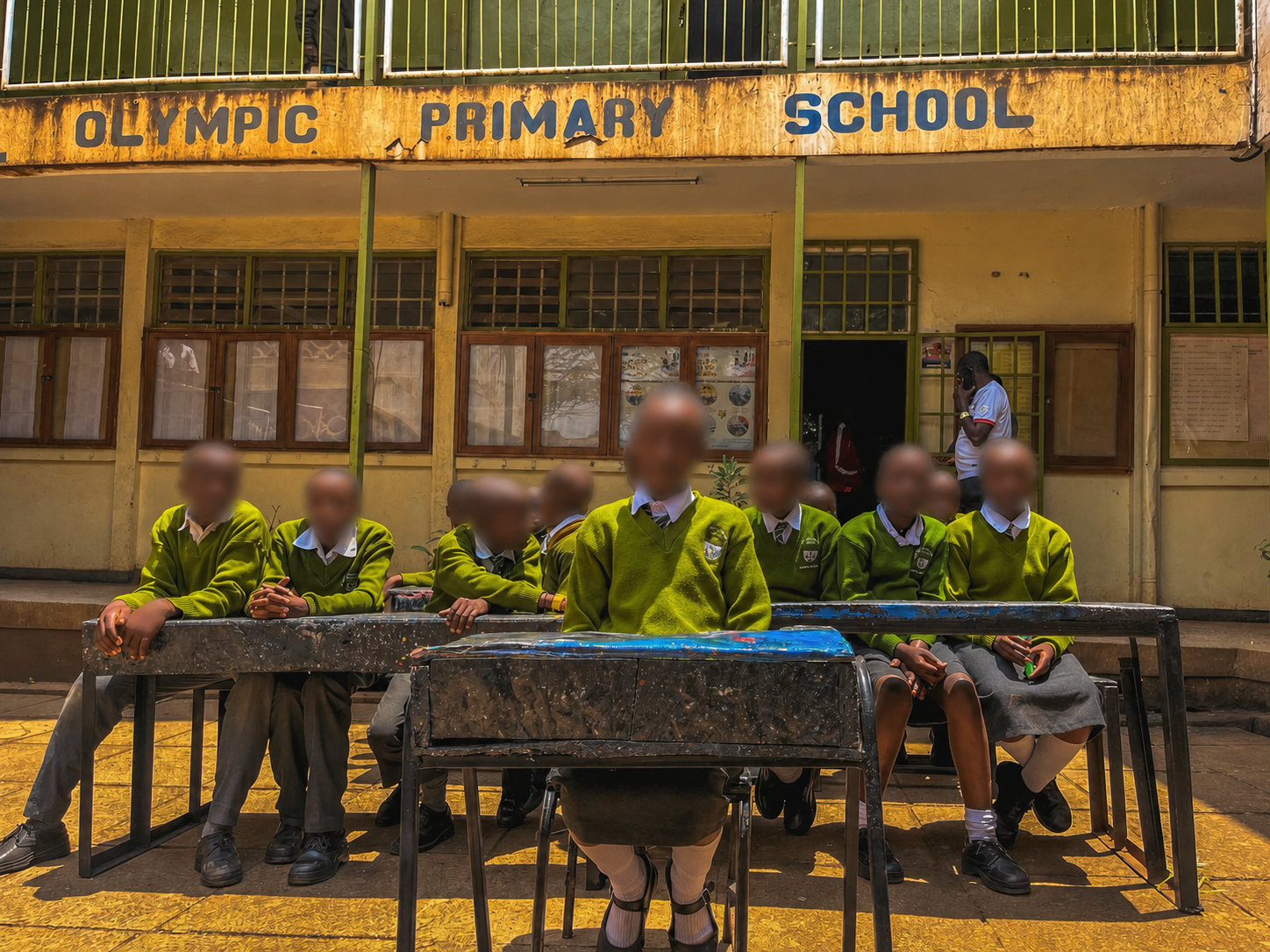
Many schools in informal settlements like Kibra, struggle with providing desks to their learners and limited classroom space due to the dense population. According to the Kenyan population census, Kibera, one of Africa’s biggest slums, has a population of over 200,000 residents sitting on a space of about 2.5km. In a public or informal school situated in Kibera, the student-to-desk ratio is high with 3 or 4 students sharing a single desk meant for two students. In some schools, students may be forced to sit on cold floors or stand up due to a complete lack of desks.
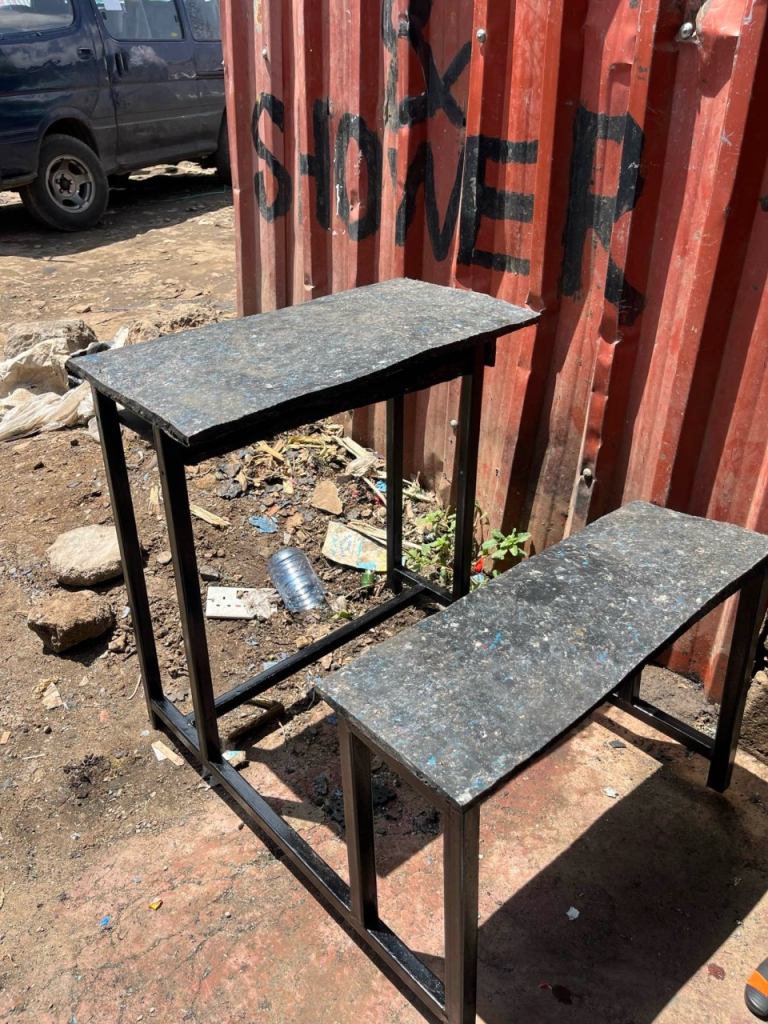
Angila makes plastic desks and lockers that can accommodate up to three learners , helping schools to make the most of the overcrowded classrooms. The desks are strong, durable , termite resistant and can last without frequent repairs often associated with wooden desks. Since the desks require little maintenance, there’s minimal need for regular painting or varnishing. There’s also no need to replace them because of rot or termite damage.
The desks offer a sustainable solution to schools in Kibra operating with limited resources and contributing to a cleaner environment through recycling plastic waste. Describing the process of creating the first prototype, Angila stated that he spent several months experimenting with different plastic types, processing methods, and designs.
” There were many trials and errors because we wanted to ensure the final product would be strong, durable, and practical for schools. Each challenge taught us valuable lessons and improved the design.” He shared during a recent interview with Green Climate Network.
According to a city public health official, recycling plastic waste while done under safe conditions, can reduce indirect health risk to communities.
Angila shares that , ”We ensure children’s safety by using carefully sorted, non-hazardous plastic materials that are thoroughly cleaned before recycling. The plastics are heat processed into solid boards, reducing exposure to contaminants. Each desk is quality-tested for strength, stability and smooth finishing with no sharp edges ensuring a safe and durable learning environment for studies…”
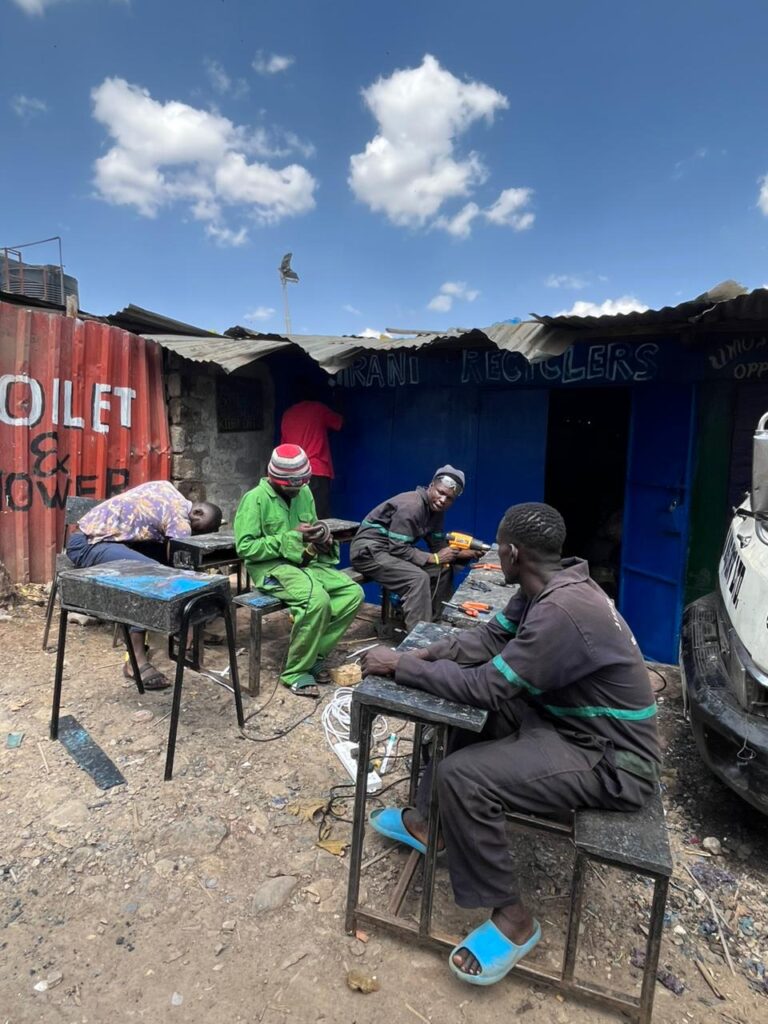
Apart from supporting education in Kibera slums, Angila’s “Built in Kibra” project creates opportunities for young people to earn an income, develop technical skills, and become environmental champions. For Jared, his initiative proves that innovation can come from anywhere.
Kibra that’s associated with numerous environmental challenges, is also full of talented , creative and resilient youth. Angila’s initiative seeks to tap into that and come up with solutions that go beyond profit. He seeks to build hope in addition to making an impact on the environment.
Many youth who once saw dumped plastic waste as useless now see it as a source of employment and innovation. Through the initiative, they are learning recycling, manufacturing, teamwork, and entrepreneurship while contributing to a cleaner community.
” Through consistent involvement, they learned waste sorting, recycling processes, and community engagement. Today, they are actively involved in our recycling activities and have become a role model for other young people interested in environmental work. Their confidence and leadership have grown tremendously through the project,” Angila shared during the interview.
Angila points out that young people who are at the center of Kenya’s green future bring in energy, innovation, and a willingness to challenge old ways of thinking. He is living proof that young people are already leading change and showing that environmental protection can create economic opportunities.
Angila, who started ‘Built in Kibra’ initiative in 2024 has recycled 1.2 tonnes of plastic, employed 13 youth and reached 10 schools making up to 30 desks every month. He hopes to expand the initiative to reach more schools in Kibera and other settlements. Angila envisions a future where all plastic waste is converted to classroom furniture to support education and provide employment opportunities.
To scale, Onyango requires investment in machinery, production space, technical support, research and testing, and market partnerships.. He envisions a future where plastic waste is transformed into affordable classroom furniture while creating jobs for young people.
To achieve this, he is seeking partnerships, investment, and technical support that would enable him to increase production, recycle more waste, and empower more communities through circular economy solutions.He also needs connections with schools, organizations, and funders who believe in circular economy solutions. Scaling would allow him to recycle more plastic and produce more desks for schools.
READ ALSO : KOCEMS NEMA Launches AI-Powered System to Monitor Air, Water and Noise Pollution
Angila commends the growing number of youth and organizations that are taking action everyday. Every tree planting, waste recycling and cleanup brings us all closer to our goal to not only empower communities but to create a cleaner and sustainable future.
Research estimates show that Kibera generates approximately 205 metric tonnes of waste each day, posing significant environmental and public health challenges for the informal settlement.Through the initiative Onyango not only provides solutions to plastic waste but also inspires learners and his employees towards environmental protection and sustainable living making him an environmental hero to emulate.