
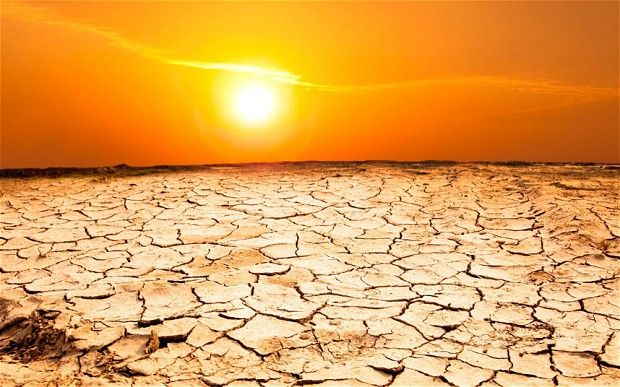
The Met Office predicts that 2026 will be one of the four warmest years on record, with an estimated global average temperature of between 1.34°C – 1.58°C.The central estimate is predicted to be 1.46°C which is above the pre-industrial levels but lower than the 1.55°C recorded in 2024.
Dr Nick Dunstone, who participated in the production of the MET forecast for 2026, said: “2024 saw the first temporary exceedance of 1.5°C and our forecast for 2026 suggests this is possible again. This highlights how rapidly we are now approaching the 1.5°C Paris Agreement target.”
Recent observations also reinforce these warnings. According to the World Meteorological Organization’s State of the Climate Update for COP30 , ‘’ The global mean temperature for January-August 2025 was 1.42 °C ‡ 0.12 °C above pre-industrial levels, underscoring the accelerating pace of climate change.’’
EXPLORE: How Can China Deliver on Its 2060 Carbon Neutrality Goal?
Part of these temperature variations have been linked to natural cycles. The El Nino conditions, for instance, boosted the average temperatures between 2023 and 2024 . In contrast, the shift to La Nina conditions in 2025, moderated global temperatures, explaining the disparity between global temperatures from January-August 2025 ( 1.42 °C) and average temperature recorded of 1.55 °C in 2024.
Beyond the natural cycles, the global increase in temperatures can also be linked to the greenhouse concentrations caused by human activity. Three key greenhouse gases in the atmosphere; carbon dioxide, methane and nitrous oxide which reached record-high observed levels in 2024. Measurements from individual locations suggest even higher concentrations in 2025.
READ MORE: COP30: In 5 Years, Heat Stress Could Wipe 80M Jobs
The atmospheric concentration of CO2 has increased from around 278 parts per million (ppm) in 1750 to 423.9 ppm in 2024, an increase of 53%. The increase in concentration from 2023 to 2024 was 3.5 ppm, a record increase in recent observational history, suggests the WMO Press Release.
The consequences of the sustained average global heat are also observable in the oceans.Ocean warming rates have steadily increased within the past two decades. Reports show increased heat content in 2025 compared to 2024 with projections that it will continue.
READ MORE: Husika App, An Early Warning System for Climate Disaster Alerts
One of the consequences of ocean warming is rising sea-levels. The average rate has almost doubled from 2.1 millimeters per year from 1993 and 2002 to 4.1 millimetres per year from 2016 and 2025.
These rising temperatures and ocean changes are already translating into more frequent and severe extreme events including wildfires, heat and floods causing massive economic and social upheaval and loss of life globally. These impacts underscore the urgent need for climate services and early warning systems as climate hazards become more frequent.