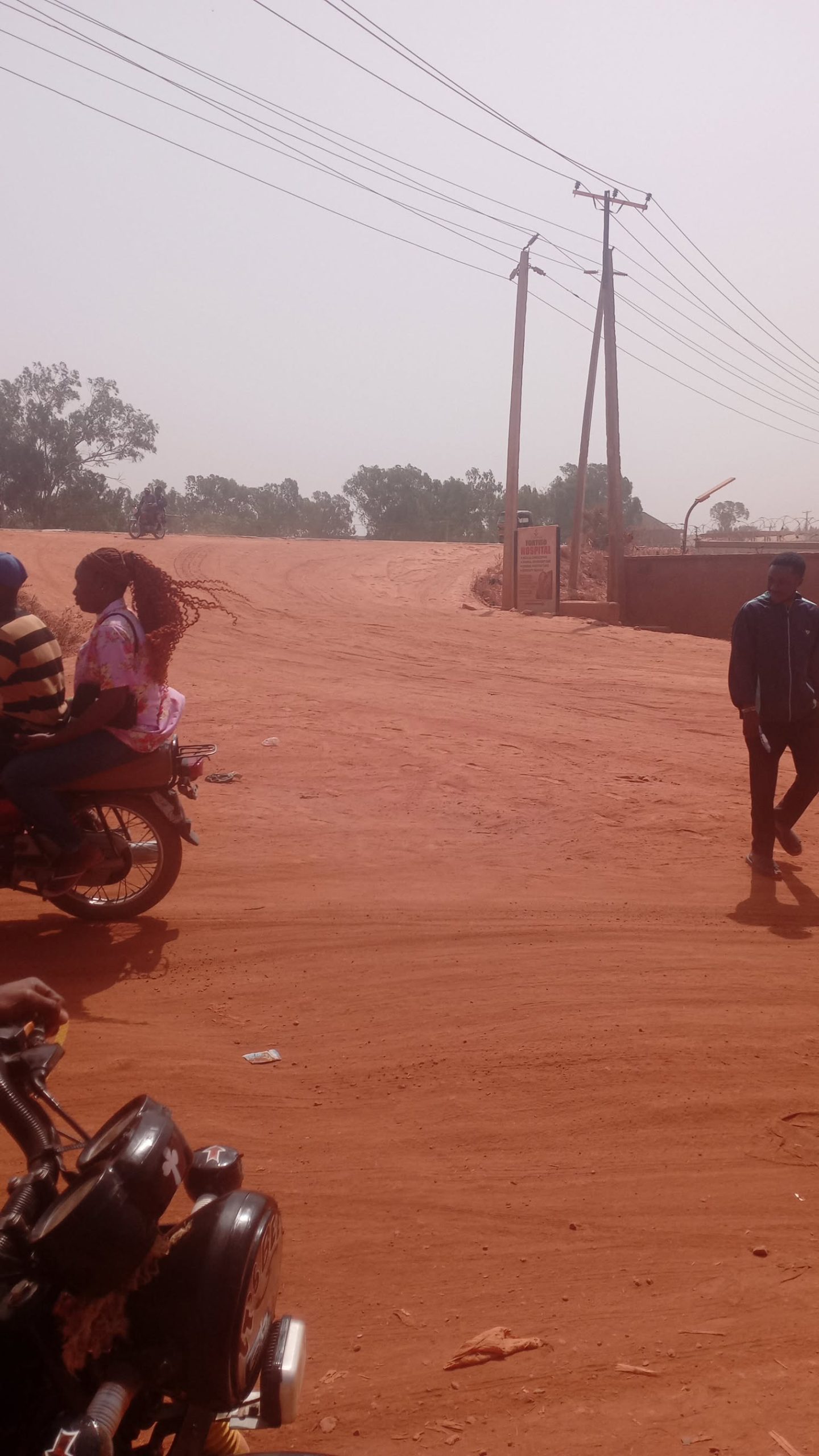
This paper examines the often overlooked environmental and human
costs of delayed road construction projects in Nigeria.
It highlights prolonged air pollution from dust, soil erosion, increased flood
vulnerability due to incomplete drainage and exposed earthworks, and
the resulting health (e.g., respiratory issues) and economic impacts on
local communities, including disrupted livelihoods and higher costs.
Many federal road projects, some initiated as early as 2005, remain
incomplete as of early 2026, despite a proposed massive N3.23 trillion
allocation in the 2026 budget for federal roads to accelerate
completion of legacy projects.
These delays exacerbate climate-related challenges such as excessive
dust, road accidents on degraded sections, recurrent flooding, and
environmental degradation.
ecommendations include prioritizing legacy project completion with
strict timelines and contractor accountability, implementing interim
measures like dust suppression and erosion controls, strengthening
environmental monitoring, adopting climate-resilient designs, and
improving governance to tackle funding and execution gaps.
Urgent implementation can mitigate these burdens, protect public
health and the environment, and foster sustainable infrastructure.
Introduction
Many roads in Nigeria have been undergoing construction for the past 15 to 20
years, with little or no visible improvement from contractors or government
authorities.
In some cases, the presence of natural resources on construction sites may lead to intentional delays, as
construction is prolonged to allow for resource extraction.These prolonged road construction practices create conditions that negatively affect the environment, public health, and road safety across affected
communities.
The Multi-Faceted Damages: Health, Safety, and Environmental Consequences
of Delayed Road Projects
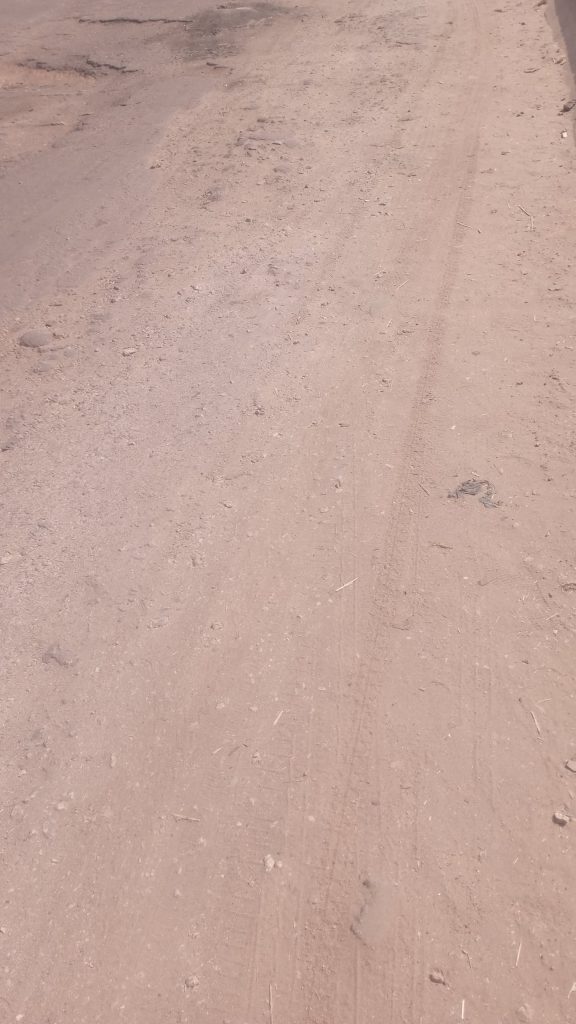
Prolonged road construction has resulted in numerous damages. The ongoing
road construction along the Kaduna-Abuja corridor has led to respiratory illnesses
among traders who sell in front of Abuja Park, located adjacent to the Federal
Cooperative College.
Commuters are also affected, as many of us are forced to use nose masks to protect ourselves from dust-related health problems, such as chronic cough, asthma, eye irritation, and skin irritation (Odubanjo et al., 2024;various studies on PM from construction in Abuja).
Travellers are also at high risk due to reduced visibility for drivers, uncompleted
road sections, and numerous potholes. These hazardous conditions frequently
lead to road accidents, resulting in loss of lives and collisions involving cars, buses,
and trucks.
The Kaduna–Abuja road has repeatedly recorded fatal accidents
caused by poor road conditions, reduced visibility, and badly managed diversions
and road blockages (Vanguard News, 2025; Motoring World International, 2025).
These impacts highlight important gaps in policy under national frameworks.
The Environmental Impact Assessment (EIA) Act (Cap E12 LFN 2004) requires EIAs for
infrastructure projects like national highways and expressways. It calls for
assessing air pollution, including dust, health risks, and mitigation measures such as dust suppression during construction (Federal Republic of Nigeria, 2004).
The Climate Change Act 2021 similarly mandates climate-proofing of national
infrastructure. It urges adaptation in transport sectors and reducing emissions
and pollution through energy efficiency and resilient practices. However,
enforcement remains weak for ongoing road projects (Federal Republic of Nigeria,
2021).
The National Environmental (Construction Sector) Regulations 2011,
enforced by NESREA, also require dust control and pollution prevention in
construction activities to lessen health and environmental damage (National
Environmental Standards and Regulations Enforcement Agency, 2011).
Prolonged and Abandoned Federal Road Projects in Nigeria: A Comprehensive
List
Here is the list of notable prolonged federal road projects, with approximate
delay durations based on public reports and updates as of January 2026:
Minna–Suleja Road – 15 years.
Abuja–Lokoja Road – 18 years.
Kano–Maiduguri Road –20 years.
Abuja–Keffi Road –12 years.
Kaduna–Abuja Road (Expressway reconstruction/dualization) – 9 years.
Port Harcourt–Enugu Road – 16 years.
East–West Road (various sections) – 20 years
Lagos–Abeokuta Road – 21 years: Legacy delays in sections; part of broader
Southwest corridor issues.
Lagos–Ibadan Expressway –20 years.
Oyo–Ogbomosho Road –15 years
Gombe–Potiskum Road –15 years
Jalingo–Numan Road –10 years
Jebba–Mokwa Road – 35 years: threats of termination in 2024 for delays;
some sections progressing in 2025–2026.
Sarkin Pawa–Kaduna Road – 35 years
Enugu–Onitsha Road –20 years
Makurdi–Ankpa Road –25 years
More recent data indicate about 5,500 deaths and 31,900 injuries per year
on Nigerian roads (FRSC historical averages; Businessday NG, 2025), often caused
by construction delays, with fatalities increasing by about 8.3 percent (in Q1 2025
compared to Q1 2024) (Motoring World International, 2025; The Guardian
Nigeria, 2025).
In December 2025, a head-on collision between two trailers
occurred at a diversion point along the Abuja–Lokoja axis (various FRSC-confirmed
incidents on the corridor, including fatal crashes involving trailers and diversions)
(Vanguard News, 2025; MSN, 2025).
The Kano–Maiduguri road has also recorded frequent accidents due to collapsed sections caused by flooding and potholes(Daily Trust, 2025), while during the 2024–2025 rainy season, floods covered parts
of the road and destroyed property worth millions (Daily Trust, 2025; Channels
TV, 2024 reports on similar events)
Consequences of Inadequate Drainage: From Road Deterioration to
Flooding
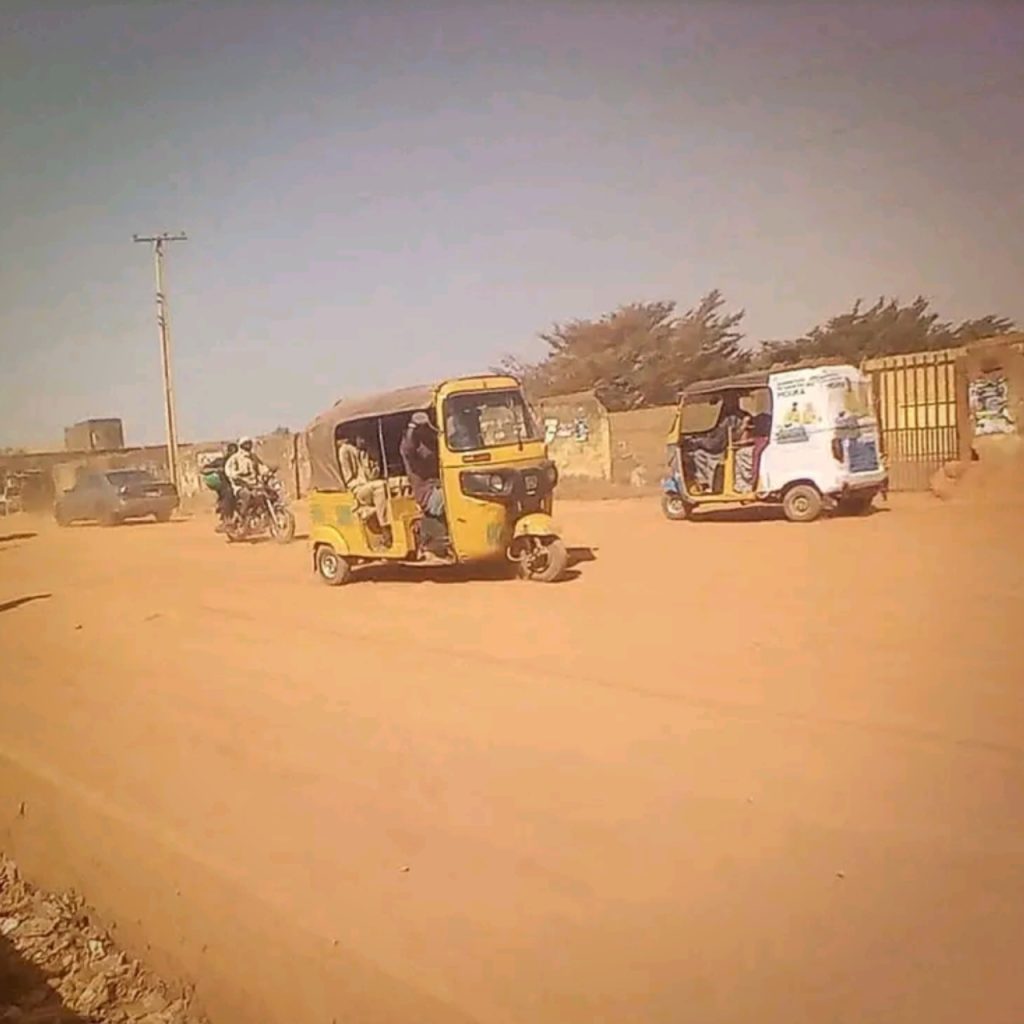
Poor and improper drainage has contributed to prolonged road construction,
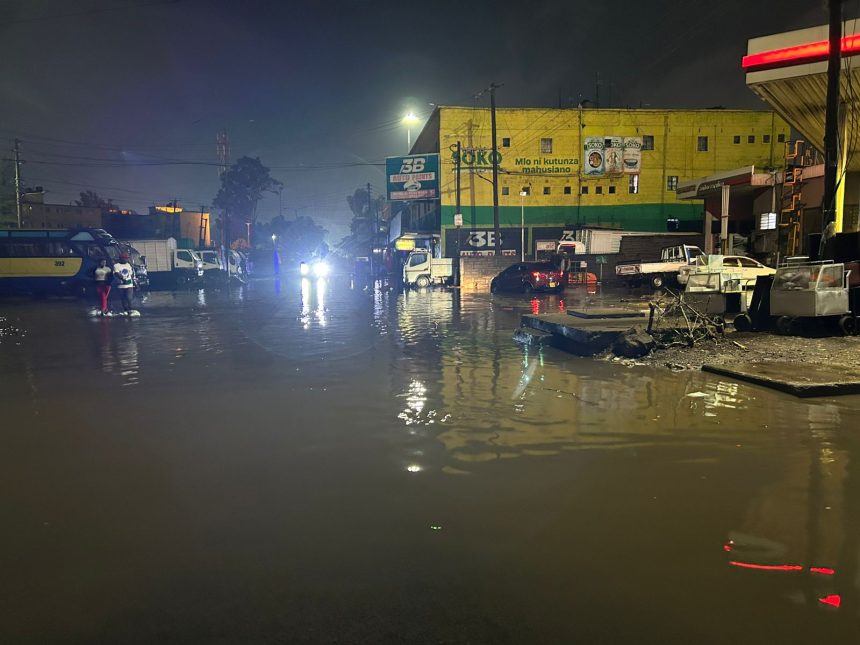
eventually leading to flooding during heavy rainfall, which often becomes a deathtrap. Most of the time, drainage systems are blocked by waste disposed of by local residents.
Standing water weakens pavement foundations and causes structural failures, leading to traffic gridlocks that increase accident risks. In 2025, Nigeria experienced one of its most complicated climate years on record,driven by heavy rainfall and extreme weather.
The flooding was deadly, with over 500 people killed in Niger State, many displaced, and extensive damage to roads,farms, and communities. It also affected hundreds and thousands of lives in homes, and farmlands (The Cable, 2025).
In Nigeria, all these events are caused by improper drainage, deforestation, and climate change (Agro Climate News, 2025).Respiratory Health Problems from Road Construction Dust In Nigeria, air pollution from dust is linked to cardiovascular disease, respiratory infections, and economic losses (World Bank, 2020).
Exposure to particulate matter (PM2.5 and PM10) from road construction dust can lead to serious health risks, including asthma, lung inflammation, and worsening of existing respiratory conditions (Odubanjo et al., 2024; various studies on construction-related PM in Nigerian urban areas).
Prolonged road construction in Kabala West and Hayin-Narayi communities in Kaduna State, which was originally scheduled to last 12 months, has extended to three years without completion. This has resulted in excessive dust pollution,leading to increased illnesses, reported mortalities, and a reduced quality of life that has become unbearable for traders and commuters.
Possible Solutions and Recommendations.
Provision of adequate funding and payment guarantees to ensure that
contractors have the financial capacity to complete projects within agreed
timelines without unnecessary delays.
This aligns with the Federal Ministry of Works’ 2026 budget proposals, which allocate N3.23tn for federal roads toaccelerate completion of inherited projects and avoid delays from funding
shortfalls.
Access to quality construction materials to ensure that roads do not get easily
damaged. The government and the public should closely monitor and checkmate
the quality of materials used during road construction. Strengthen this through
stricter enforcement of the Public Procurement Act 2007, which promotes transparency, value for money, and quality standards in public contracts, including road projects.
Construction of proper drainage before work commences, as flooding can halt
and destabilize ongoing projects, leading to forced stoppages and damage to
already existing road structures.
This should be mandated under the Environmental Impact Assessment (EIA) Act 2004 and the National Environmental(Construction Sector) Regulations 2011 by NESREA, which require environmental
safeguards, including drainage systems and storm water management, to prevent
erosion and flooding impacts.
Strong accountability policies should be established to hold government
agencies and contractors responsible for prolonged delays and project
abandonment. Penalties such as fines or legal sanctions should be enforced to
keep all parties in check.
Build on the Public Procurement Act 2007 (via the Bureau
of Public Procurement) for oversight, transparency, and sanctions against non-
performance, as well as the Federal Ministry of Works’ current policies on
contract reviews and revocations for delays.)
Provision of water supply during prolonged road construction to control dust
levels. This will help reduce air pollution, protect human health, and minimize
environmental damage. Enforce via the National Environmental (Construction
Sector) Regulations 2011 by NESREA, which specifically require dust suppression
techniques like water spraying to control fugitive emissions and protect public
health.)
Policies should mandate the completion of ongoing road projects before new
ones are initiated. This will ensure that existing constructions receive adequate
time, resources, and attention, reducing abandonment and unnecessary
delays.
This echoes the Federal Ministry of Works’ “Renewed Hope Road
Infrastructure Revolution” agenda and 2026 “action year” focus on prioritizing
and fast-tracking inherited/ongoing projects before new awards.
The government should ensure that only qualified and experienced
professionals are engaged in road construction projects, rather than unqualified
individuals or contractors who lack the technical capacity to deliver durable
infrastructure, simply because they want to divert money meant for quality
construction.Reinforce through the Public Procurement Act 2007 procurement
guidelines and the Infrastructure Concession Regulatory Commission (ICRC) Act
2005 for PPPs, which emphasize technical/financial capability in contractor
selection to prevent incompetence and corruption.
CONCLUSION
Prolonged road construction in Nigeria has caused serious problems for people,
communities, and the environment. Roads that remain unfinished for many years
lead to accidents, flooding, dust pollution, health issues, and loss of lives and
livelihoods.
Poor drainage, lack of proper planning, corruption, climate change,
and weak supervision have made these problems worse.To solve this issue, the government must ensure that road projects are wellplanned, properly funded, and completed on time.
Contractors should be held responsible for delays and abandoned projects, and only qualified professionalsshould be allowed to handle road construction. When roads are built correctly
and finished as planned, it will reduce accidents, protect people’s health, improve
transportation, and make life better for Nigerians.
ENDNOTES
Federal Ministry of Works. (2025). Road construction inspection tours and
updates. https://www.fmw.gov.ng/
Federal Road Safety Corps. (2025). Road traffic crash statistics: January to
September 2025. As reported in TVC News. https://www.tvcnews.tv/road-
accidents-kill-over-3400-in-2025-frsc/
Mohammed, S. (2025, October 21). Road accidents kill over 3,400 in 2025 – FRSC.
TVC News. https://www.tvcnews.tv/road-accidents-kill-over-3400-in-2025-frsc/
United Nations Office for the Coordination of Humanitarian Affairs. (2025, June
2). Nigeria: Floods – Mokwa, Niger State flash update 1.
https://www.unocha.org/publications/report/nigeria/nigeria-floods-mokwa-
niger-state-flash-update-1-june-2025
UNICEF. (2025, June 10). UNICEF Nigeria humanitarian situation report (Mokwa
floods), 10 June 2025. ReliefWeb. https://reliefweb.int/report/nigeria/unicef-
nigeria-humanitarian-situation-report-mokwa-floods-10-june-2025
Premium Times Nigeria. (2025, December 21). Gridlock: FRSC deploys more
officers, tow trucks on Abuja–Lokoja Road.
https://www.premiumtimesng.com/news/top-news/844632-gridlock-frsc-
deploys-more-officers-tow-trucks-on-abuja-lokoja-road.html
Premium Times Nigeria. (2022, October 7). Floods: FRSC diverts traffic from
Lokoja – Abuja highway. https://www.premiumtimesng.com/news/top-
news/558457-floods-frsc-diverts-traffic-from-lokoja-abuja-highway.html
Eboesomi, S. (2025, November 13). Reps to probe N20trn abandoned federal
properties across Nigeria. Premium Times Nigeria.
https://www.premiumtimesng.com/news/headlines/835008-reps-to-probe-
n20trn-abandoned-federal-properties-across-nigeria.html
Federal Republic of Nigeria. (2021). Climate Change Act, 2021.
https://faolex.fao.org/docs/pdf/NIG208055.pdf
Businessday NG. (2025, October 14). Road accidents surge by 9.4% in Q2 2025.
https://businessday.ng/transport/article/road-accidents-surge-by-9-4-in-q2-2025
Daily Trust. (2025, September 29). 1 year after collapse, Kano–Maiduguri highway
in Bauchi remains unfixed. https://dailytrust.com/1-year-after-collapse-kano-
maiduguri-highway-in-bauchi-remains-unfixed
Motoring World International. (2025, July 11). Concerns as soaring road crash in
Nigeria kills 1,593, injures 9,298 in Q1 2025.
https://motoringworldng.com/concerns-as-soaring-road-crash-in-nigeria-kills-
1593-injures-9-298-in-q1-2025