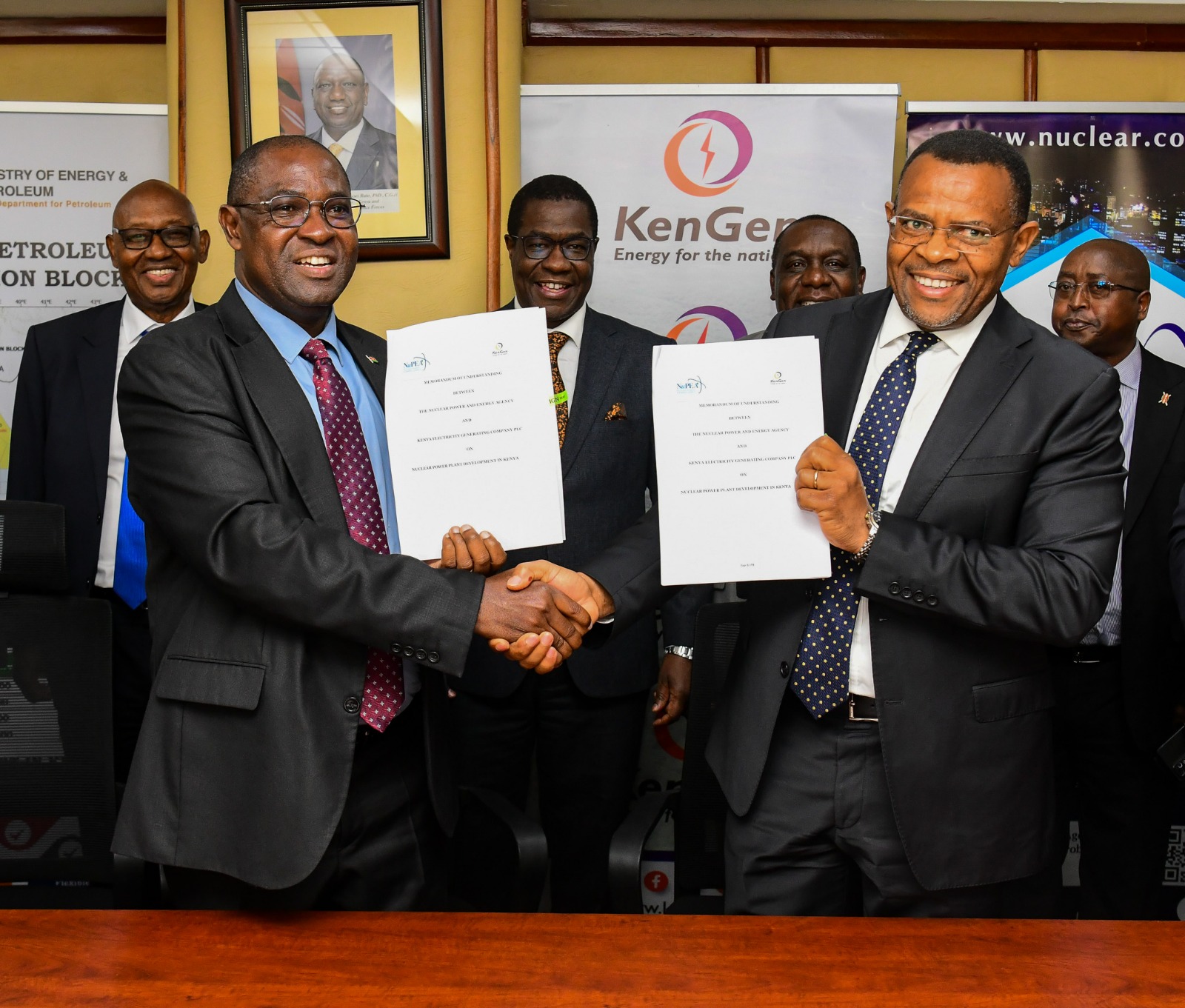
The Government of Kenya has appointed the Kenya Electricity Generating Company (KenGen) as the operator of its first nuclear power plant, advancing the government’s plan to add up to 10 gigawatts of new electricity capacity to fuel long-term industrial growth.
EXPLORE: Celebrating Influential Women in Kenya’s Energy Sector 2025
Speaking during the signing of a Memorandum of Understanding (MoU) between KenGen and the Nuclear Power and Energy Agency (NuPEA) on December 1, Energy Cabinet Secretary Opiyo Wandayi said that the move supports President William Ruto’s goal of expanding the nation’s energy capacity and securing a dependable, low-carbon source of baseload power.
READ ALSO: What Grand Ethiopian Renaissance Dam Means to Kenya’s Hydroelectric Power
“This agreement signals the start of Kenya’s nuclear-power era,” Wandayi said. He added that appointing KenGen ensures technical expertise, public trust, and long-term stability for the project. The MoU establishes a Joint Engagement Framework between the two agencies to guide preparations, focusing on comprehensive public education, community involvement, and stakeholder engagement.
“This marks the beginning of our nuclear-power era,” Wandayi said. He added that choosing KenGen brings tchoosing KenGen brings technical strength, public confidence and long-term stability to the programme.
READ ALSO: Safaricom PLC Launches KES 40 Billion Fixed Rate Green Notes to Accelerate Climate-Smart Investments
The move is part of a broader government strategy to add up to 10 gigawatts of new electricity over the coming years, supporting economic growth and ensuring a stable, low-carbon power supply.KenGen Board Chairman Alfred Agoi welcomed the move, noting the company’s extensive experience managing major power plants.
KenGen MD and CEO Peter Njenga described the partnership as a “bold step” for Kenya’s energy security, noting that nuclear power will complement the country’s existing clean-energy portfolio, which includes hydropower, geothermal, and wind.He also committed to providing clear, timely, and accessible information to the public throughout the nuclear development process.NuPEA CEO Justus Wabuyabo stated that the MoU moves Kenya from long-term planning to practical readiness for nuclear development.
A Joint Working Group will be formed under the agreement to oversee nationwide public engagement, conduct early site assessments, train journalists and local leaders, host technical forums, and create a feedback system for communities.The project aims to stabilize electricity supply, reduce outages, and control tariffs, thereby supporting manufacturing, digital industries and broader economic growth.